
What The Female Quotient's AI Summit revealed about creativity, human judgment, and the future of talent. A special event perspective from our Operations & Marketing Lead, Maddie.
AI can write copy, generate visuals, analyze data, and bring ambitious ideas to life in a fraction of the time it once took. But as the possibilities expand, so does the amount of content competing for our attention.
As someone working at the intersection of marketing and communications, I've been particularly interested in how AI is changing not just the way we work, but what makes the work itself valuable.
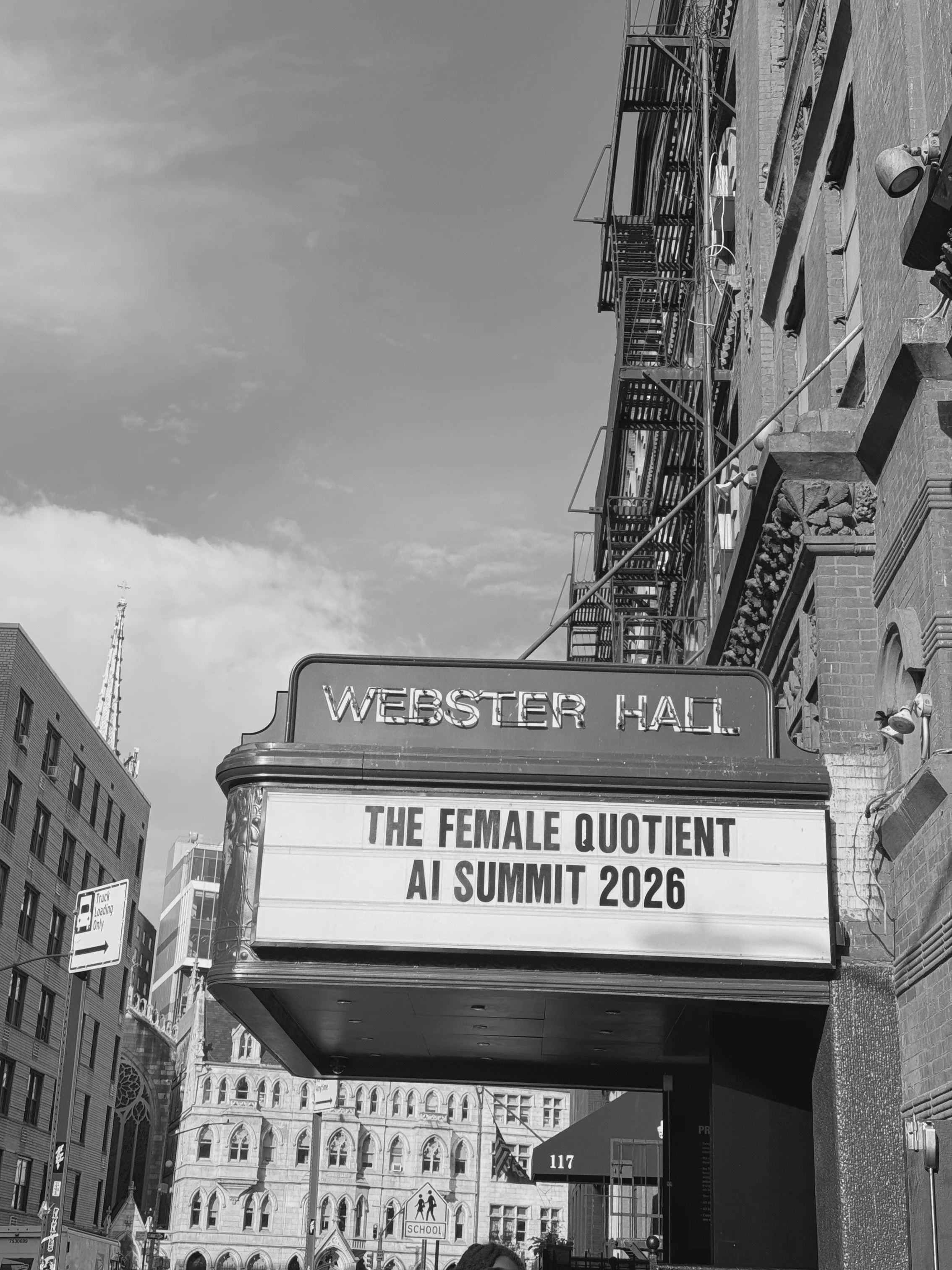
That curiosity brought me to The Female Quotient's AI Summit in New York City, where one question continued to surface: If AI is making it easier to produce good work, what will it take to produce truly great work?
When Good Enough Becomes the Standard
One observation from the summit particularly stuck with me: "AI makes mediocrity the floor."
Tasks that once required hours of research, drafting, and production can now happen in minutes. For teams balancing tight deadlines and growing expectations, that's an undeniable advantage. But greater efficiency doesn't automatically translate into greater impact.
The phrase "innovation slop" came up to describe a growing challenge: producing more simply because technology makes it possible, without necessarily creating anything more meaningful.
We've all seen examples: polished LinkedIn posts that don't actually say anything, campaigns that feel indistinguishable from everything else, and content that gives audiences very little reason to engage.
AI has made it easier to reach a baseline level of quality. It's also made that baseline considerably more crowded.
When almost anyone can produce something that looks professional, the differentiator becomes the thinking behind it. Understanding your audience, recognizing what resonates, and knowing what's worth putting into the world are what separate content production from effective marketing.
The question is no longer just how quickly we can create something, but whether we're creating something worth paying attention to.
The Creative Ceiling Is Getting Higher, Too
For all the concerns about AI-generated mediocrity, the summit also demonstrated how the technology is expanding what's creatively possible.
One example involved a commercial concept that had reportedly been sitting on the shelf for four years because of production costs and logistical challenges. AI-assisted production techniques finally made it possible to bring the idea to life.
For creative professionals, that's an exciting shift. Teams can experiment faster, explore more directions, and pursue ideas that once felt out of reach.
But the technology doesn't replace the people developing those ideas. AI can help make a concept possible; recognizing which concepts are worth pursuing still requires imagination, experience, and creative judgment.
When Everyone Has the Same Tools, What Makes You Different?
Another recurring theme was the growing importance of human insight.
As technology makes it easier to generate increasingly sophisticated content, audiences may become even more drawn to real people, behind-the-scenes storytelling, and perspectives that feel distinctly human.
There's also a challenge around originality. When brands rely on similar tools and source material, their content can begin to look and sound remarkably alike.
Standing out has always required a distinct perspective. AI simply makes that perspective more important.
For brands, that means understanding what makes their voice and approach unique. For professionals, it means recognizing that technical skills are only one part of what makes someone valuable. Curiosity, cultural awareness, original thinking, and the ability to connect seemingly unrelated ideas matter just as much.
What Does This Mean for the Talent We Hire?
Working at Monday Talent, I couldn't help but consider how these conversations might influence hiring across marketing, communications, and creative industries.
AI literacy is becoming an increasingly relevant professional skill. But as more candidates gain access to the same tools, familiarity with the technology alone may become less useful as a differentiator.
This raises an important question for employers: How do we recognize exceptional talent when technology can help almost anyone produce polished work?
For hiring managers, it means looking beyond the finished product and understanding the thinking behind it. How does a candidate approach a challenge? What informs their creative decisions? Can they recognize when something isn't working, even if it looks polished on the surface? Do they know when to leverage technology and when to trust their own instincts?
These qualities distinguish someone who simply knows how to use a tool from someone who knows how to create meaningful value with it.
The Responsibility Still Belongs to Us
Greater creative freedom also comes with greater responsibility.
As AI becomes more integrated into everyday business operations, trust, accountability, and responsible implementation become increasingly important. Innovation alone isn't enough. Meaningful transformation requires intentionality, thoughtful decision-making, and clear guardrails.
For marketing and communications professionals, this is particularly relevant. Reputation, credibility, and consumer relationships are central to the work, and those aren't things brands can afford to leave entirely in the hands of technology.
AI can help us work faster and make more informed decisions, but it doesn't eliminate our responsibility to evaluate those decisions and understand their potential impact. Ultimately, technology can support the work, but accountability still belongs to the people and businesses using it.
Raising the Ceiling
I left The Female Quotient's AI Summit feeling optimistic about the opportunities AI is creating, but also more conscious of the responsibility that comes with using it well.
For marketing and creative professionals, it offers the ability to explore ideas faster and take on work that may previously have felt out of reach. For employers, it means rethinking how we identify, evaluate, and develop exceptional talent.
From my perspective, the most exciting possibility isn't that AI will make us more productive for productivity's sake. It's that it could give talented people more room to do the work they're best at: developing ideas, solving problems, building connections, and bringing fresh perspectives to the table.
AI may be raising the floor for everyone, but raising the ceiling still comes down to the people behind the work.
Mouth Off With Monday is just the start of the conversation. For more insights, talent trends, and behind-the-scenes of the industries we work in, connect with us!
